
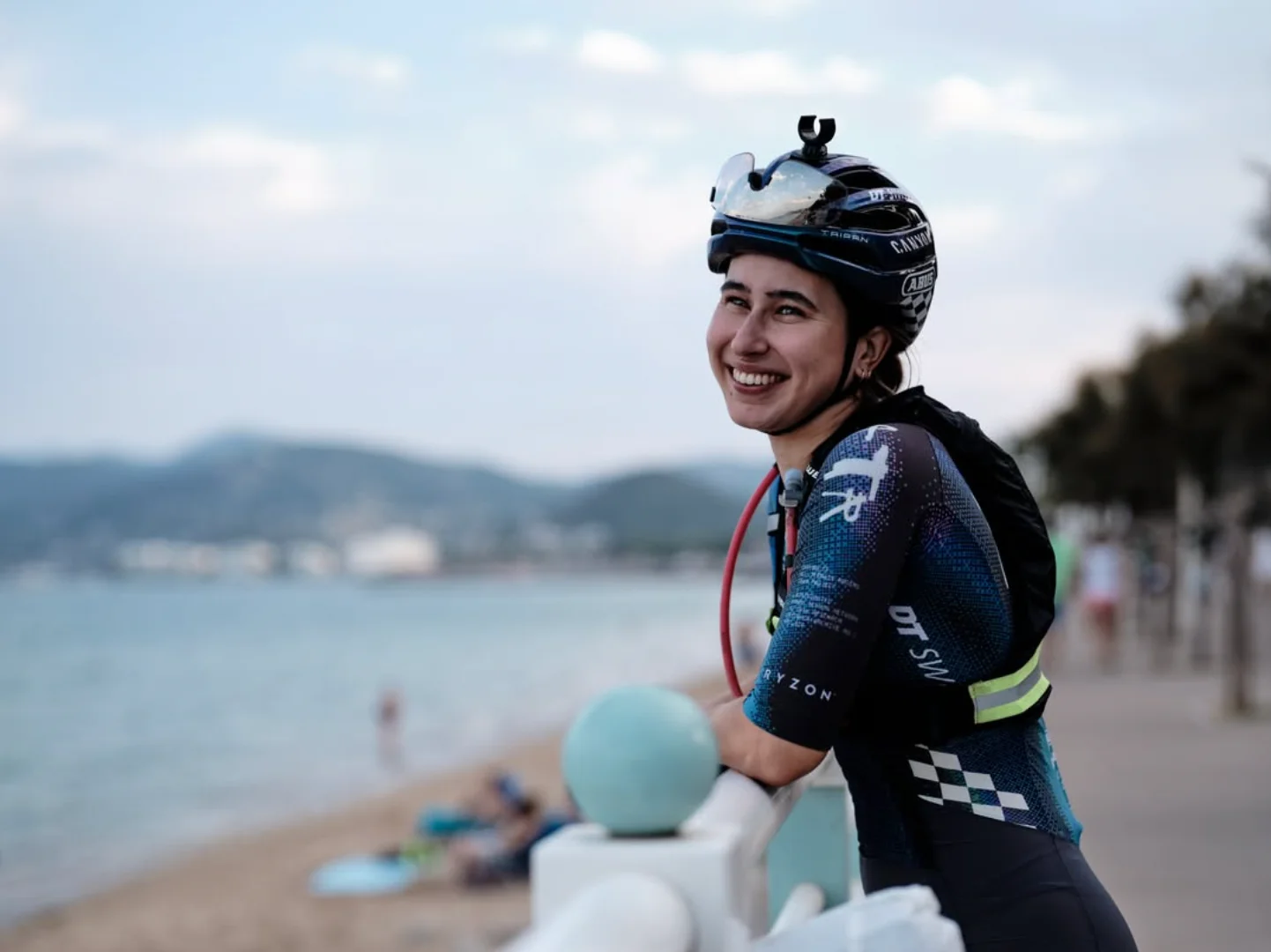
Inside the Mind of Marei Moldenhauer: "You won't have to earn your place"
Crédit photo @davidrbck @blackforestcollective
A German hospital doctor by profession, a cyclist who came to competition late, diagnosed with celiac disease at 19, Marei Moldenhauer stacks up three constraints that most riders wouldn't have the courage to take on at the same time. And yet, in just a few seasons, she has established herself at the front of European women's bikepacking, stacking finishes on the circuit's most demanding events.
What stands out about her is the way she turns each constraint into method. Her work at the hospital taught her what real pressure feels like, and led her to a line that sticks with you: "Pressure in cycling is a privilege." Her celiac disease, rather than limiting her, has pushed her to become one of the most prepared riders on the circuit when it comes to nutrition, the kind who carries a bit more food than everyone else and plans ahead for every village she'll pass through.
We're catching her at a particular moment in her trajectory. First-ever outright winner of the GRAAALPS with a course record to boot, she has just wrapped up her first full season with the Canyon x DT Swiss All Terrain Racing team. Her recent months were also marked by the Taurus Mountain Race, that very first Turkish edition of The Mountain Races circuit that we covered back in October, where she was sitting 12th overall when the race was cancelled for safety reasons. There is a lot to understand about what she went through this year, and even more about how she talks about it.
Now, let's step inside the mind of Marei Moldenhauer.
1. You have just won the 800 km GRAAALPS, becoming the first woman to win the event and breaking its record. How did you experience this race?
It was fun! 800km with 20.000m of elevation is a terrain that suits me as I love climbing. I've never been in the french alps before so it was really nice to discover that area. It was really beautiful in the mountains. I loved that we passed italy as well as I did stop for a few espressi.
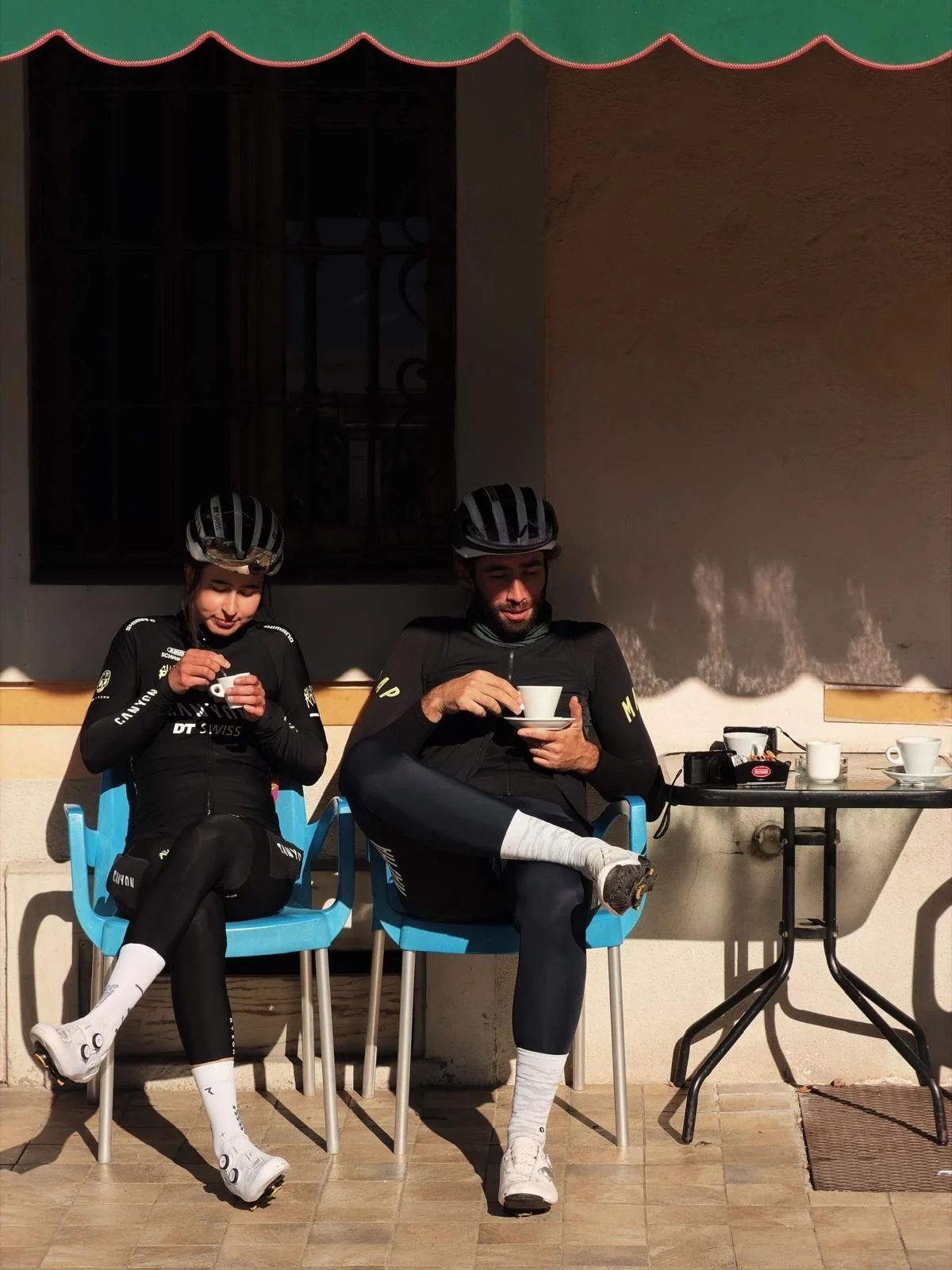
Photo : marei.mol
2. You have mentioned several times having had issues related to your celiac disease during races, notably once at the Atlas Mountain Race. Have you managed to find a solution to this nutrition problem today?
I've found ways to make it work, but how easy it is still depends a lot on where I'm racing.
Celiac disease is an autoimmune condition. When I eat gluten, it triggers an immune response that can damage my small intestine. So I have to be careful even about things like breadcrumbs on a cutting board. I was diagnosed at 19, after losing seven kilos in two or three months. My period stopped for about a year. My mum has celiac disease too, so it runs in my family.
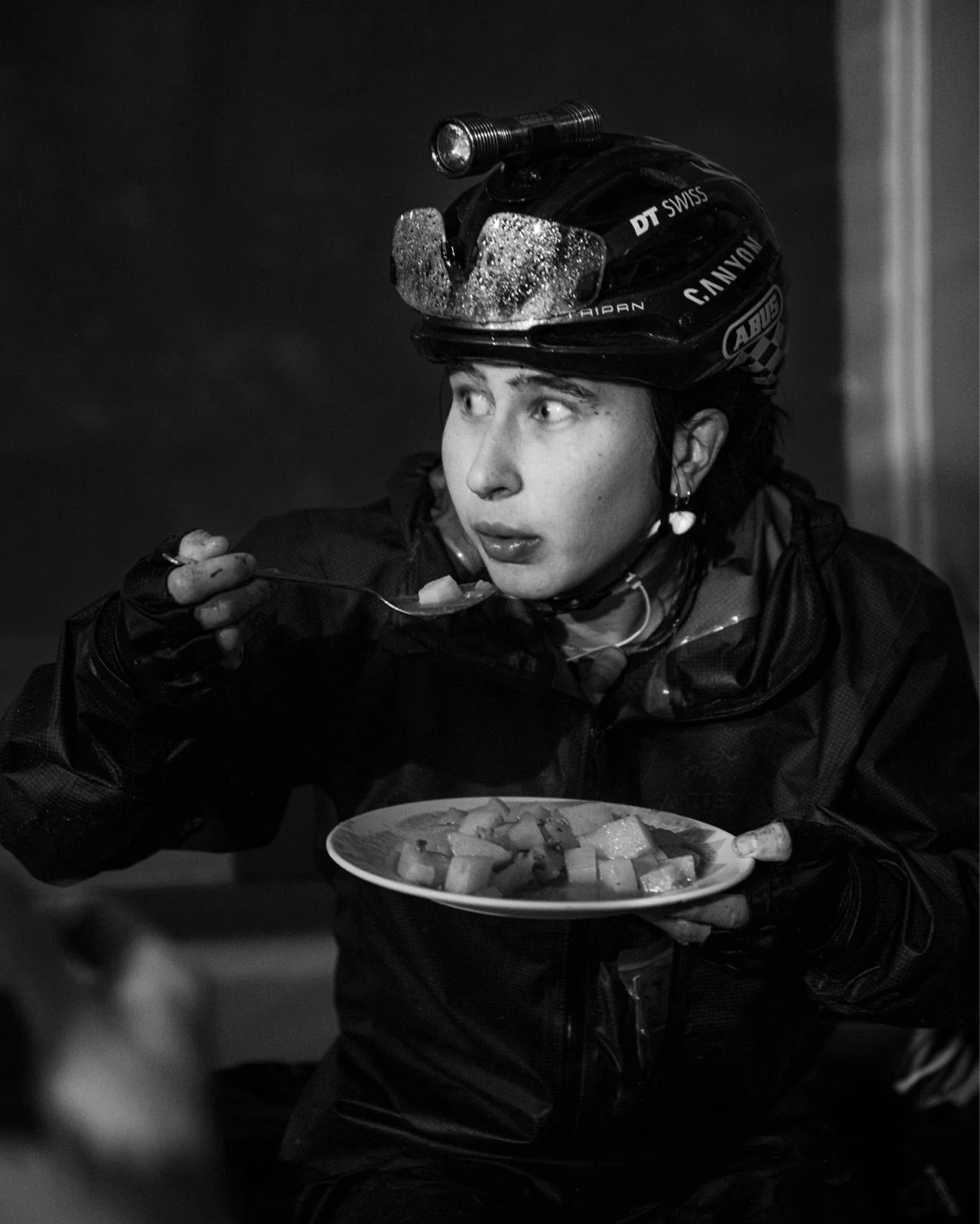
Photo : Nils Laengner @nils_laengner
I honestly used to think that would rule out remote races like the Atlas Mountain Race or the Silk Road Mountain Race for me. Eventually, I decided to give the Atlas a go and see if I could make it work. And somehow it was possible. I probably carry a lot of food I know I can eat (probably more than others) and think ahead about where I can resupply and what I might expect there. Sometimes that means an extra stop or a detour while everyone else can just ride on. It costs me a bit of time, but I can live with that if it means I get to race in places like the Atlas Mountains.
"Pressure in cycling is a privilege."
3. You are a doctor, and at the same time, you practice a discipline that pushes your body into extreme situations. Does your perspective as a doctor change the way you experience ultra-cycling?
Yes, especially regarding my view on pressure. Working full-time as a doctor is such a big part of my life that it inevitably shapes how I see things outside the hospital. At work, I've learned what it feels like to make decisions that can affect people's life. That's changed how I think about the pressure I experience before and during an ultra race.
Pressure in cycling is a privilege. I work hard for these races, and of course I want to do well. But I also feel lucky that I'm healthy enough to spend days racing my bike and fit enough to be competitive. When I'm nervous on the start line, it helps to remember how much I wanted to be there in the first place.
4. You told me that you have a very busy life. How do you manage to organize your daily routine between your job, cycling, and everything else?
It's all about setting priorities. There are things I care about that I don't get to do as often as I'd like. That can be hard, but right now it feels like the right choice for me.
My coach helps me plan my training around my hospital shifts. We look at the whole week together, because a hard week at work changes how much training I can do. I also joined Canyon x DT Swiss All Terrain Racing this year, and the team takes a lot off my plate before races.
5. For some female athletes, the opportunity to compete against men in the overall standings is an added motivation. How important is this to you?
It is definitely a motivation for me as well. I always try to play a bit in the front, also in the overall classification if possible. But I do think there's still many physiological differences between men and women and it's important to have the two categories.
"In many of the places I've raced, people have told me it wasn't safe for me as a woman."
6. Do you feel like you experience ultra-cycling differently because you are a woman?
I think women experience many things in life differently from men. We've come a long way towards equality, but there's still a way to go. For a long time, women had very little visibility in sports or couldn't even participate, including cycling. There are more and more races for women now, but a lot of the training theory, equipment and bikes are still developed for men. We're only now learning more about the female body and how it works differently.
There are also a lot of differences during races. For example, many women, including me, always get their period during an ultra. So there's the practical side of managing your period and keeping clean during a race.
Then there's safety. In many of the places I've raced, people have told me it wasn't safe for me as a woman. Luckily, I've never had a serious incident, but I know many women have. That changes how we move around and where we rest during races.
"I am still very often surprised at what our bodies can actually endure and overcome."
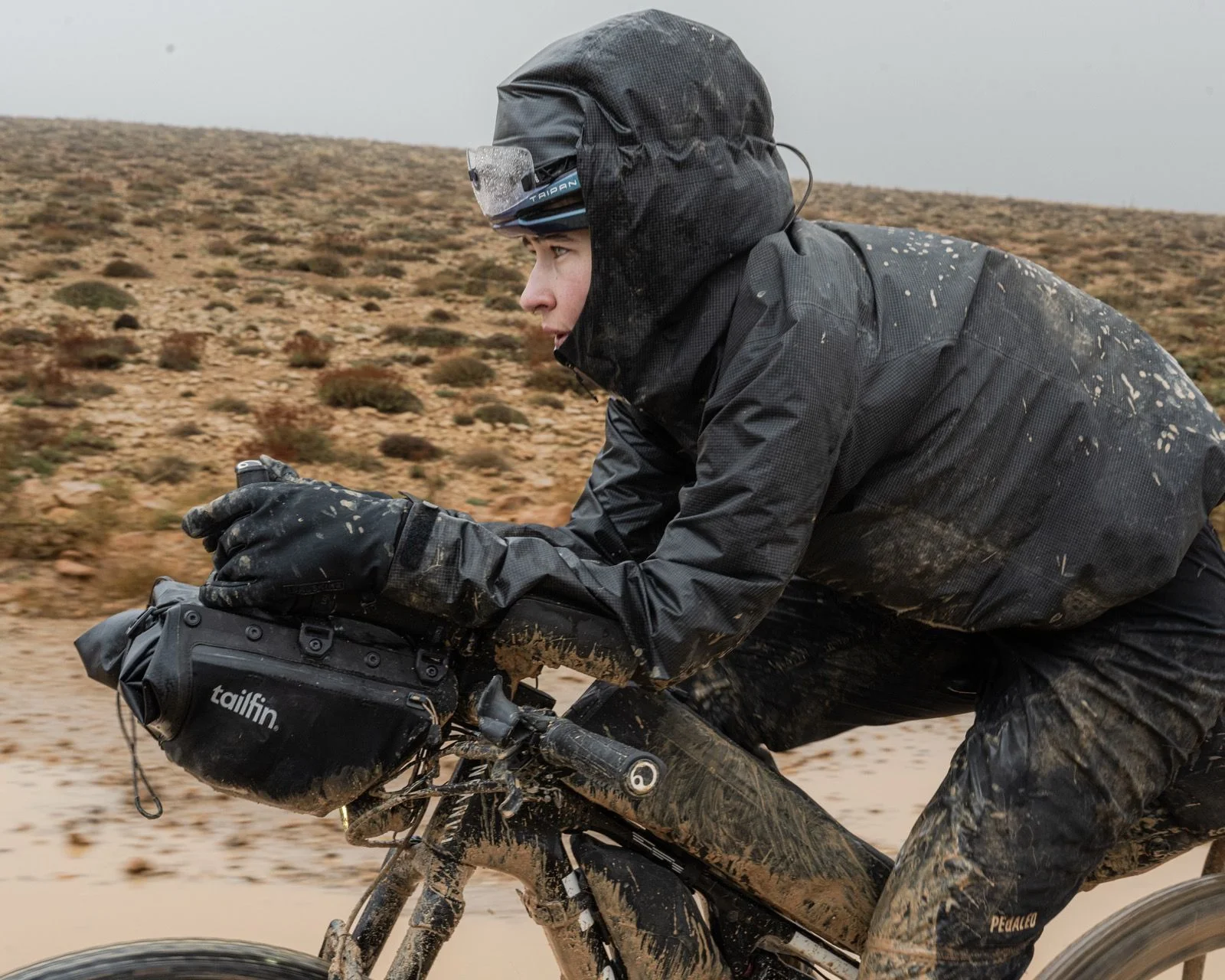
Photo : Nils Laengner @nils_laengner
7. Ultra-cycling is a discipline that pushes you to string together long distances, nights outside, fatigue, situations where you really have to rely on your body. What kind of relationship do you have with it today?
Now I just focus on what my body can do and I can appreciate my body now for what it is. I am still very often surprised at what our bodies can actually endure and overcome and how I can train my body to be able to do even more. Since I had my serious knee injury last year and two knee surgeries, 12 weeks on crutches and countless hours of physio, I can appreciate it even more for just being healthy.
"I know I am often capable of much more than I think."
8. You write that you have learned to trust your body more. What caused this trust to evolve?
I've now done things I never thought I could do. Before my first 200km ride, I was sure I wouldn't be able to finish it. Now I know that I am often capable of much more than I think, and that with training, I can do things that once felt out of reach. I still have to train a lot to reach my goals, but I can get there is the first and most important step.
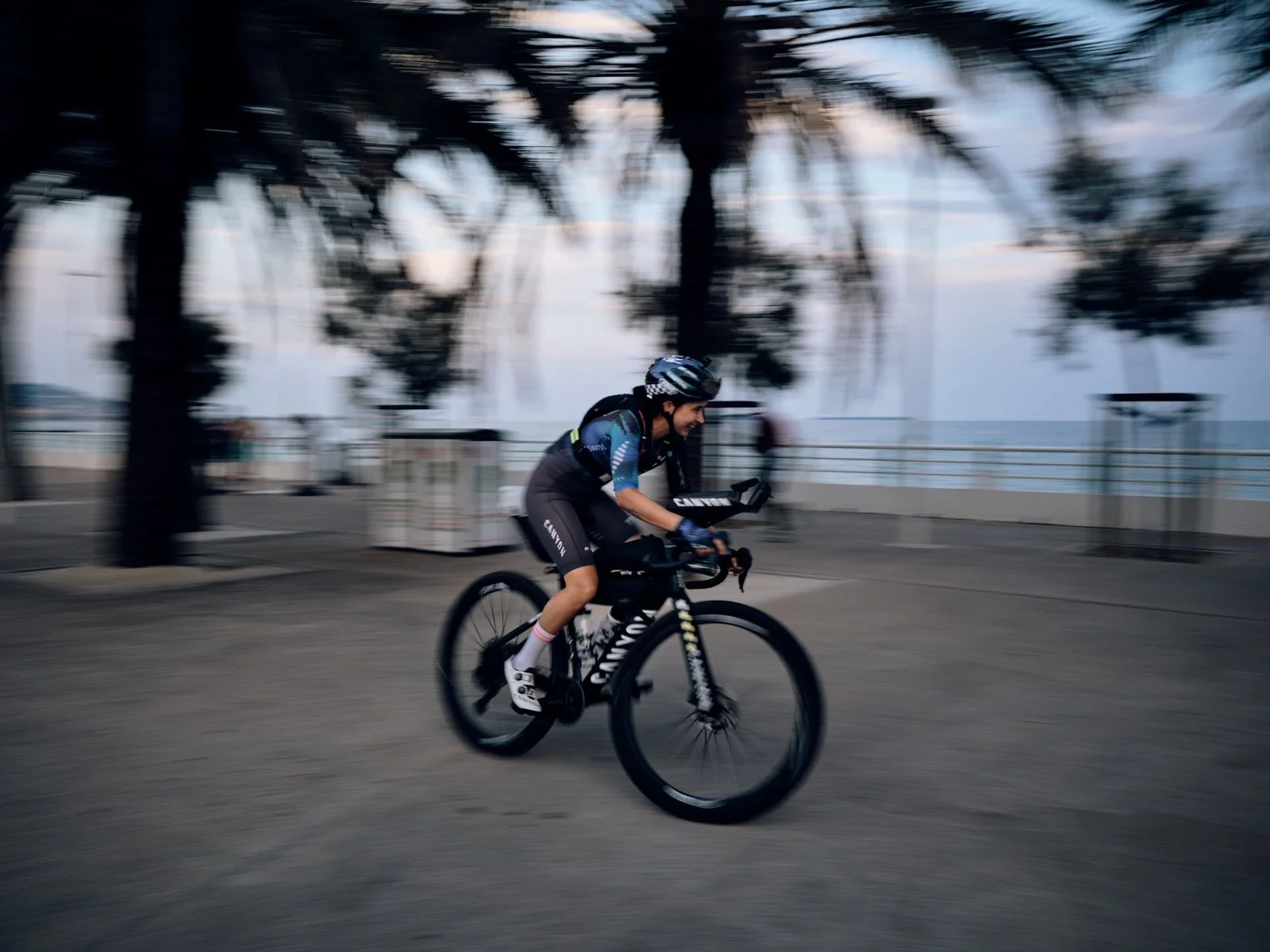
Photo : @davidrbck @blackforestcollective
9. You started cycling quite late, without necessarily seeking performance, and then gradually turned toward increasingly ambitious distances and goals. What made you want to push a little further at each step?
I think I have always been a very ambitious person. I've never been competitive as a child, I even feared competition. But when I set my mind to something I really chased it until I achieved it, never in interference with others, just for things that I could achieve without interfering with others.
10. Today, you continue to set goals for yourself that may go beyond what you already know you are capable of doing. What goes through your mind when you decide to attempt something you don't yet know if you can achieve?
Somehow I am scared but I think I learned that things will work out in the end somehow. The fear I feel makes me prepare really well and for every occasion. This makes me feel a little safer in a situation that I cannot yet fully oversee. I also know that when I finally reach the finish line, that's a feeling that is not comparable to anything.
"You won't have to earn your place by achieving something."
11. If you could meet little Marei, how would you describe to her the life she is going to have?
You're going to have a full and colorful life. You might always feel a little different, but you'll find people who love you for who you are and make you feel like you belong. Your life will be filled with love and good people. And you found not one thing that you love doing but many things that define you. And you won't have to earn your place by achieving something. The people who matter will love you just as much when you're simply being yourself. You chase your dreams and you thrive while doing that. It is a good life and you know that. You can't imagine all of this yet, and that's okay.
Your world will become so much bigger than it feels right now.
A huge thank you to Marei for the time she gave us, for the generosity of her answers, and for the way she opens up the discussion so plainly about her condition, her experience as a woman in ultra-cycling, and her relationship with herself. We wish her a 2027 season worthy of her ambitions!
To follow Marei:
- Instagram: marei.mol
- Strava: Marei Moldenhauer
And to make sure you don't miss any of the upcoming interviews, races, and athlete portraits of the season, subscribe to the Bornés newsletter! We'll be back very soon with another ride inside the mind of a rider from the calendar.
You read it all. Looks like we have things in common.
We’ll send the next one straight to you.
Bornés is an independent French media on trail running and ultra-cycling. Our newsletter is written in French.